The Games of (My) Life: 1991-1995
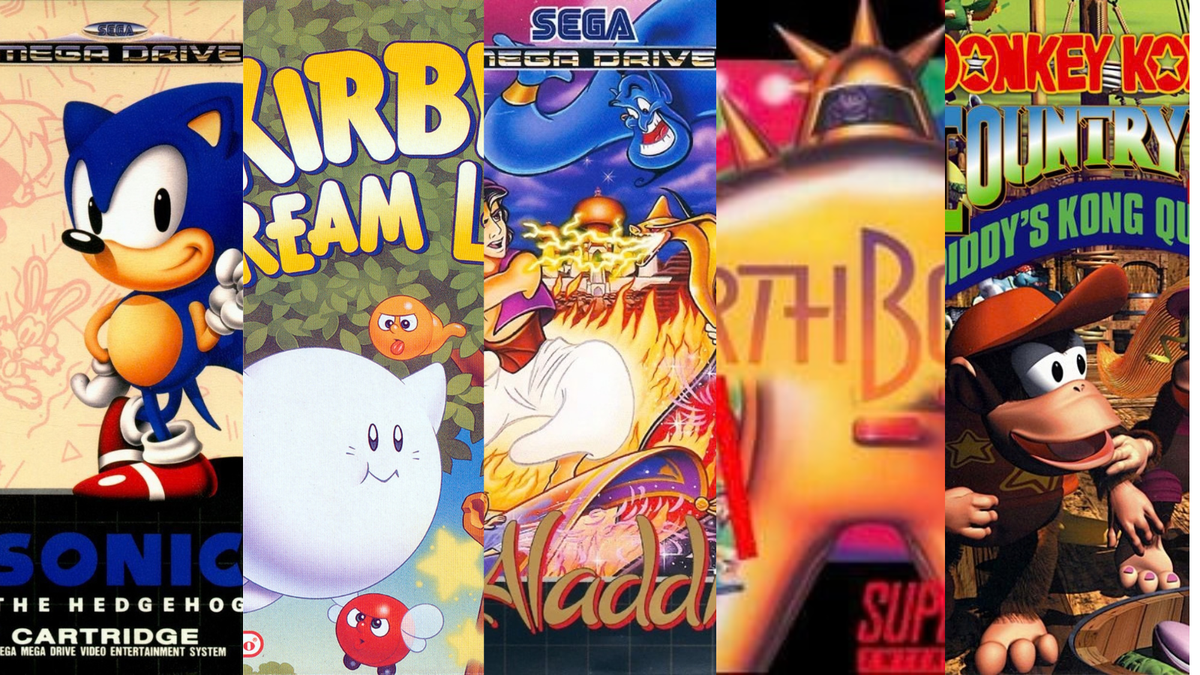
Though not the artistic medium to which I’ve devoted most of my writing or analytic time – that being either literature or music – I think video games might be the defining medium of my life. They’ve been there since I was very small, a constant background noise, and even at times when I haven’t been playing as much, they’ve always hovered somewhere on the edge of vision. Besides that, I was born at the beginning of the 90s, and my lifetime has seen various trends of games as a genuine cultural force, from Pokémon to Wii Sports to Fortnite. If J. Alfred Prufrock measured out his life in coffee spoons, perhaps I measure mine in games.
So here is one for each year of my life to date that has impacted me or otherwise moulded me in some way. I’ve been a little cheeky with release dates, choosing Japanese or European ones to better suit my narrative, but it doesn’t really affect the overall coherence. As Lesley Gore sang, it’s my arbitrary list and I’ll fudge dates if I want to.
1991: Sonic the Hedgehog
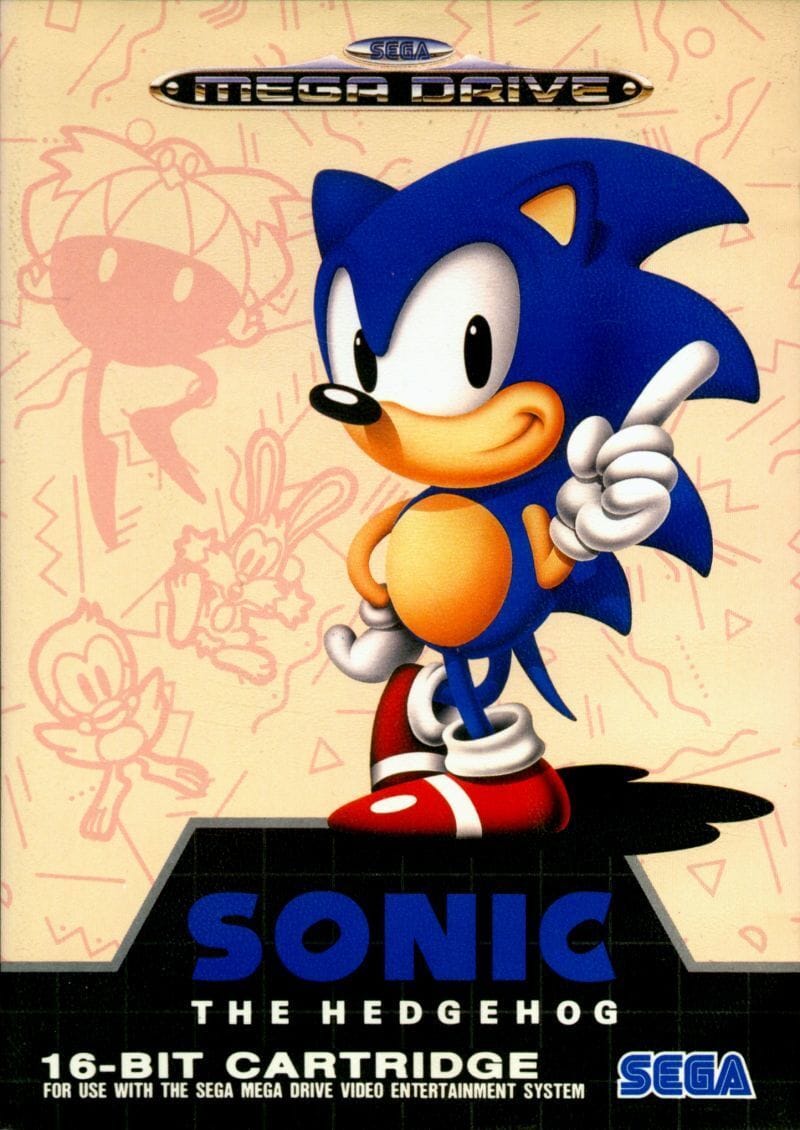
I don’t know what the first game I played was. We had an NES and a Sega Mega Drive at home when I was small, both belonging to my older brother, and I suspect it was most likely one of those that I first played, likely making my first game either this one or its sequel, or perhaps Super Mario Bros 2 or 3. A big theme of these early entries, perhaps unsurprisingly, will be playing games that weren’t my own. Ownership, in many senses, would come later.
If it was Mario that I played first, then it was an older game (albeit only about 5 years old) on a defunct console. But of course you don’t really notice these things when you’re younger. In fact, while we’ve seen big leaps in technology in my lifetime, very few of them have been immediately noticeable even between console generations – perhaps only the leap to 3D around the mid-90s, or the jump between the Playstation/N64 and PS2/Gamecube generations really stand out in that sense, and even then probably only because by that stage I was attuned to them.
So, like many children of my generation, I grew up with Sonic and Mario, seeing them as the two great platform heroes. What I didn’t realise until much later was that they were not quite contemporaries – Mario had been around for the better part of a decade by this stage, while Sonic’s first game had only just come out in 1991. I am, in other words, the same age as Sonic.
Not that this has forged a deep connection between us, necessarily. I never owned a Sega console, and have played only a couple of Sonic games since the Mega Drive days. By contrast, I’ve played the majority of the major Mario platformers that have come out in my lifetime: 64, Sunshine, Galaxy 2 (though not, oddly, the first one), Odyssey et al. Just as Sega were forced out of the console market, Sonic never had a huge impact on my life or cultural development after those first few years[1].
Which is partly why I wanted to start here, in fact. I played this game and its sequel quite a lot, but they belong pretty neatly to the early period of my life. They’ve stayed with me only as memories, not as something I feel much need to revisit (unlike, for instance, most of the games on the 1996-2000 chunk of this list). I’m quite happy for them to stay as memories, and for the “Seeeee-gaaaaa” chant that sounded when you turned on the console to reverberate only through my dreams.
1992: Kirby’s Dream Land [2]
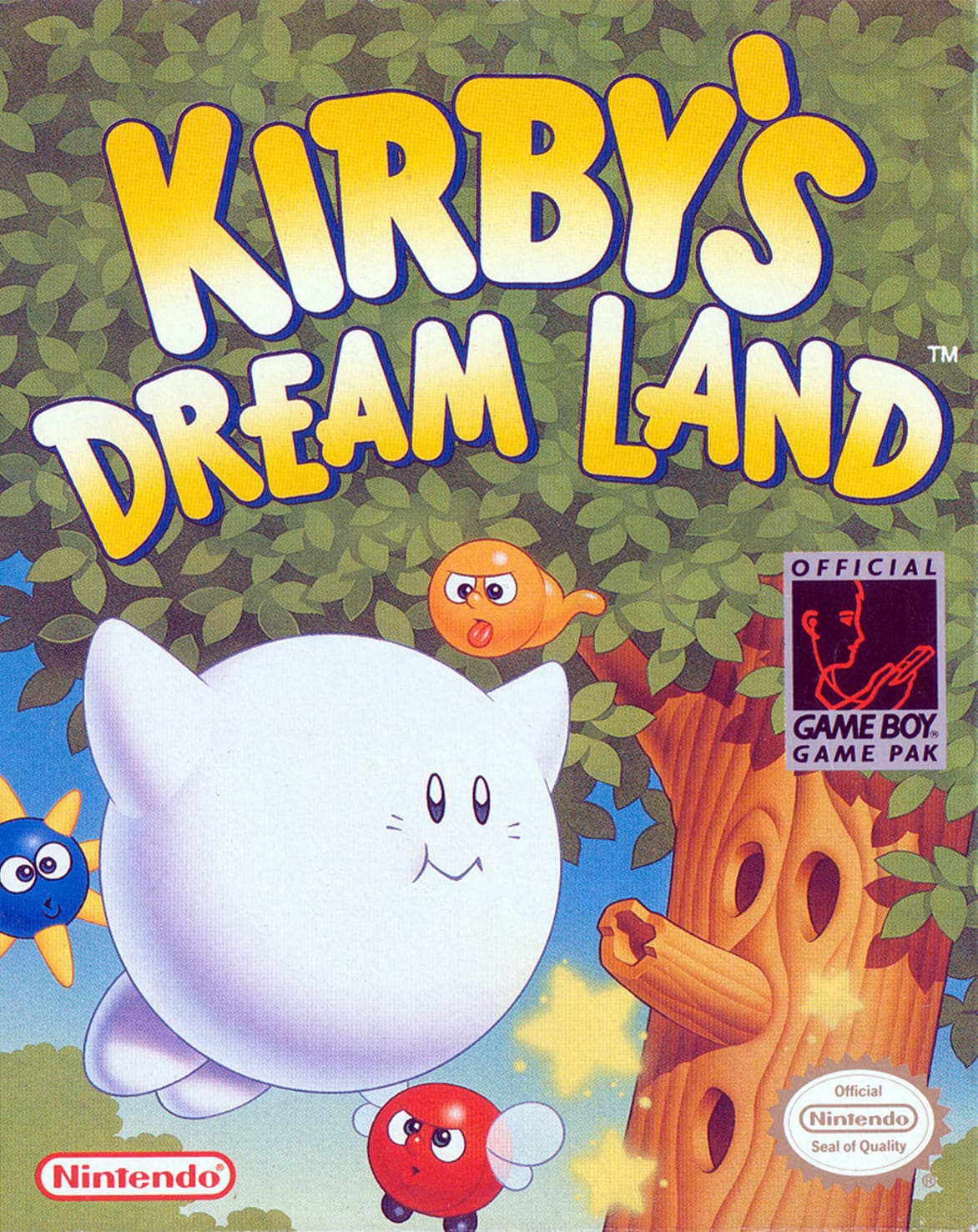
I had three major sources of games in the years before I really owned my own consoles. The first, my older brother’s games, we’ve seen, and the third we’ll see in the next entry. The second, though, was games belonging to friends, which I might hear about over weeks in the school playground and out playing on the road before finally getting to play. This remained true after I had my own games (after all, there’s a real limit to how many games you can have as a child), but it was particularly sharp before that point when I had to wait to be invited around to friends’ houses to play many games.
This was particularly sharpened with games for the SNES, a console we didn’t own, and so all of my exposure to it came from a friend’s house. I vividly remember his description of Kirby as “a pink blob,” which is both entirely accurate and not at all helpful in determining who exactly this fellow is. And yet I can’t entirely blame him, not only for possessing a child’s descriptive abilities, but also for being unable to fully capture the bizarre fever dream that are the Kirby games.
They haven’t changed a great deal across three decades: Kirby wanders through a brightly coloured landscape doing some platforming and fighting enemies. Many of these enemies he can eat, and thus gain a variety of powers from sword-fighting to cooking, which themselves have a range of uses. Like most other platformers, Kirby has a range of enemies, beginning with your common Waddle Doo (ambulatory blobs whose main characteristic is a giant eye) all the way up to his nemeses King Dedede (a large penguin with a hammer) and Meta Knight (similarly shaped to Kirby, but blue and with a mask). And yes, I like explaining and analysing video games, but I don’t really know where to start with all this.
It worked for me though – it was and remains a fun gameplay loop, and visually appealing to boot. But perhaps the bigger appeal was something else. Many of the games featured a multiplayer mode, where Kirby could be accompanied by a helper of his own creation (presumably his child? Let’s not get too into the weeds of Kirby’s reproductive capability). I’d played multiplayer games before, but this was my first experience of a true co-op adventure. And I loved the idea of getting to share the experience over hours with a friend.
And yet, as you’ll see, this was a bit of a dead end. The vast majority of the games you’ll see on this list, and the majority of those I’ve played, are single-player only, and even for those that have a multiplayer mode, I’ve rarely engaged with it in any depth. That’s not to say I haven’t shared gaming experiences with friends down the years, but they’ve generally been more along the line of in-depth conversations, anecdotes, and occasionally watching someone play. I think that last, though, extends to the appeal of watching gameplay on Twitch or YouTube, something I’ve spent untold hours of my life doing. There’s something about that shared experience that’s extremely valuable.
1993: Aladdin [3]
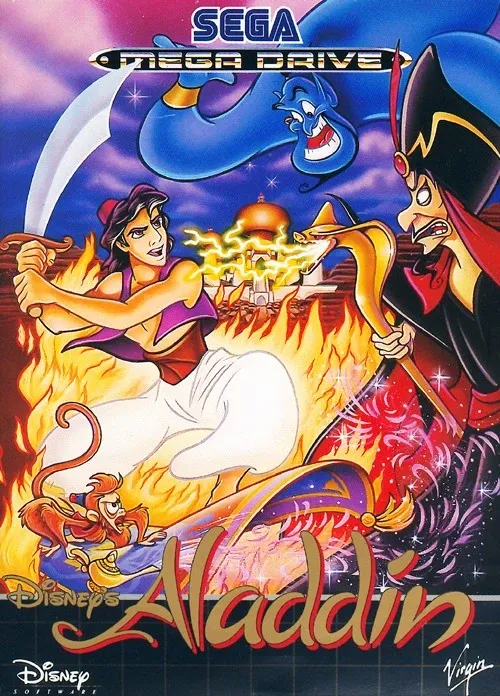
Game rental was a major feature of my first decade or so’s relationship to the medium. My local Xtra-Vision was a haven where I’d seek out the wonders of whatever games they’d decided to invest in, which tended towards movie tie-ins and other relatively safe bets. So it’s not a shock that this and 1994’s The Lion King would be games that I remember reasonably well, both being based on enormously popular animated films.
As a child, you don’t really know what you’re doing, picking games. You go for the familiar: characters and names that you recognise. Sometimes, maybe, as you get a little older you might plump for something that you’ve vaguely heard is good; that’s how I picked up Ocarina of Time completely blind, for instance, and pretty much changed my life in the process. But mostly, as with films, books et al, you find what you recognise and stick with that.
And much of the time in the 90s and 2000s, this had a tendency to lead you astray. There were any number of god-awful film tie-ins in those years, which mostly didn’t go so far as to be buried in landfill, but possibly should have been. But a handful, through some minor miracle, turned out to be good, even very good. And this is a pretty famous example; a game that was genuinely fun, and seemed to have had real effort put in. Not the last that we’ll see in this list: there are actually two film tie-ins a few years down the line, one of which you’ve very likely heard of, that had no business being as good as they were. For that matter, the whole concept of a Disney tie-in that somehow ended up being remarkably good would lead us eventually to Kingdom Hearts. But of course, that had a heavy dose of the incomprehensibly weird mixed in. Which leads us neatly on to…
1994: Earthbound
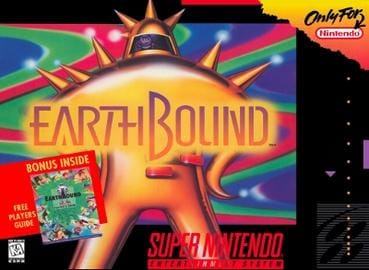
A game that I’ve yet to play beyond the first hour or so.
Yes, yes, I’ve heard that it’s very good, and what seems like its curious mix of charm, offbeat humour and some form of cosmic horror would likely appeal to me. But I’m basing all of that on vague second-hand knowledge from reading things about the game down the years. In fact, that’s where just about all of my knowledge about it comes from.
I was first exposed to its existence through main character Ness’s presence in the Super Smash Bros games, inaugurating the apparent trend of director Masahiro Sakurai (creator of Kirby and therefore the main character of this entry) throwing in characters from games he particularly likes regardless of popularity. It certainly left me with some questions. Who was this strange magic child amid the familiar faces of Link, Donkey Kong and Pikachu? Why was he being treated as if I should know him?
By that stage, I was reading gaming magazines, so seeing glimpses of games I didn’t know was a familiar experience. But there was something uncanny about this, because Ness was so unknown. I hadn’t played a Metroid game, but I knew who Samus was, but I didn’t even know what Ness was from. And there was something tantalising about that. It tapped into a sense of wonder and possibility.
And it’s true that I never fully played Earthbound. I made attempts in my teens, at a time when I was delving into older games, but never got very far. But, in a way, I’m not too sorry about that. It preserved the wonder, a wonder inculcated at a time before my taste in games developed, when I was far more open to new experiences and things I didn’t understand than would be the case later. It seems appropriate that a game like Earthbound, based around a child’s perspective, would tap into that sense of wonder.
All of which to say: turns out I haven’t played many games that came out in 1994. But even that pales in comparison to…
1995: Donkey Kong Country 2: Diddy’s Kong Quest
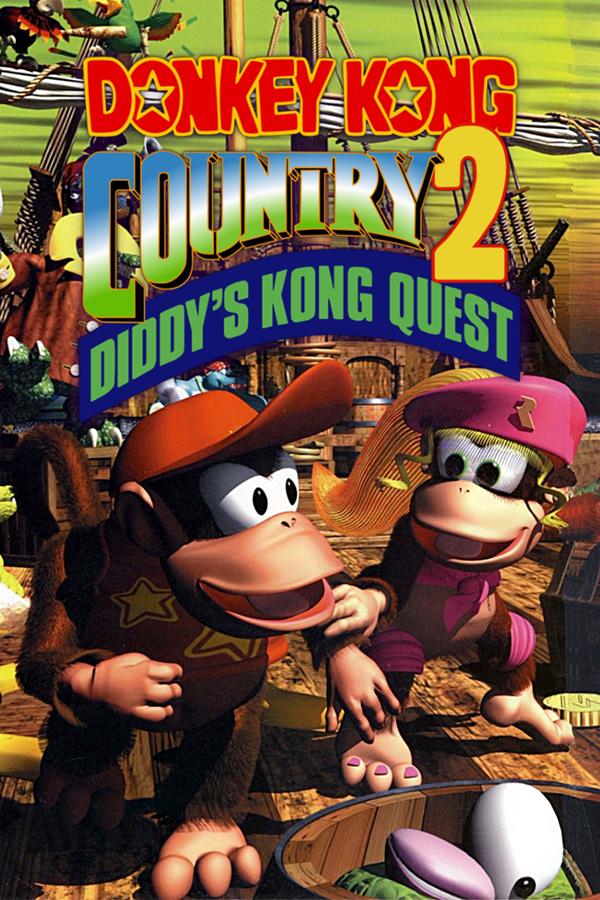
I think this was the hardest year of all to choose, because it seems like, no matter how many lists I consult, I just haven’t played a single game that came out in 1995 (no, not even Chrono Trigger; yes, I’m aware that’s odd given many of the other picks later in this list). So instead I’ve gone for what, CT aside, is probably the most influential of the games I haven’t played on my tastes, to the point that I think I could very easily brainwash myself into believing that I actually played the Donkey King Country games.
If I had a go-to genre in this sort of era, it was likely colourful platformers centred on anthropomorphised animals or objects. The most significant example will be showing up in the next batch of this list, but others that come to my mind include Glover (centred on a wizard’s glove that becomes sentient and is able to throw around a variety of balls), Yoshi’s Story, Eek! The Cat (based on the cartoon of the same name and apparently dreadful, though I can’t say I noticed), various Donald Duck and Mickey Mouse games, and the king of them all, Donkey Kong 64. Which was, of course, itself a sort of entry in the DK Country series, made by the same developers and centring on the same family of misfit apes.
Gaming is still a young medium, and doesn’t always have a sense of ancestry or origin. But there’s a very easy thread to follow going from this game and its prequel through many of those games that consumed endless hours of my childhood. So, in a way, I’d be remiss not to pay tribute to Donkey Kong Country, even if only for its indirect influence.
And I promise every entry from now on is a game I’ve actually played.
[1] I did read Sonic the Comic for a while as a child, but remember precisely nothing about it.
[2] There’s a little bit of a cheat going on here – several of the things I describe in this entry, including Kirby’s copy abilities and the multiplayer mode, were introduced in subsequent Kirby games, and my first Kirby game was probably one of Dream Land's sequels, but I can’t say that my memory of the time distinguishes much between the early titles. There will be a fair bit of cheating in the choices for these entries – I refer you back to my Lesley Gore comment.
[3] There are two remarkable things about the Aladdin game from a contemporary standpoint. The first is that it came out in November 1993, a full year after the film on which it was based, though aligned to its home video release, something that would be unthinkable only a few years later. The second is that two games were made based on Aladdin, for the SNES and the Sega Mega Drive, released at the same time but made by different developers. In an age where we can play literally the same game across consoles with cross-play support and transferable save data, it seems almost incomprehensible.